
How Can I Easily Increase My Protein Intake?
Every food we eat is made up of three macronutrients when digested: protein, carbohydrates, and fat. While all of these macro groups are important for optimal health, protein is probably the most important, especially if you’re trying to lose weight!

If you're constantly tired, falling sick more often, or struggling to build muscle, you might not be getting enough protein! If you're cutting protein to lose weight—think again! This essential macronutrient actually supports muscle growth, metabolism, and overall health.
In this article, we’ll explore protein’s impact on your body, the signs of deficiency, and simple ways to increase your intake.
4 Reasons Why You Should Eat More Protein
You may not have known it before, but protein helps with weight loss and optimal health in multiple ways:
👍🏻 Increases Fullness and Reduces Hunger
Protein is more satisfying and satiating compared to both fats and carbs. In other words, protein keeps you feeling full longer than carbs and fats do. Eating enough protein also helps to regulate your hunger and fullness hormones, ghrelin and leptin. This means you can eat fewer calories and lose weight without feeling “hangry” all the time. Win-win!
👍🏻 Preserves Lean Muscle Mass
When you’re losing weight, you are either losing lean muscle mass or you are losing body fat. Most people want to lose body fat, not lean muscle mass. After all, many of us still enjoy looking strong and toned! Eating enough protein ensures that you’re losing body fat while in a calorie deficit, not muscle mass!
👍🏻 Boosts Metabolism and Burns More Calories
The Thermal Effect of Food (TEF) refers to how many calories your body burns as it digests the food you eat in the form of protein, carbs, and fats. Protein has the highest TEF, which means you boost your metabolism and burn more calories when you eat protein versus eating carbs and/or healthy fats.
👍🏻 Helps Regulate Blood Sugar and Reduce Cravings
Protein helps to slow the digestion of carbs, which reduces blood sugar spikes and energy crashes. This helps to control cravings for sweet and salty foods. It’s much easier to eat healthy if you’re not dealing with cravings all the time!
While there are countless benefits to eating enough protein, the reality is that it’s a challenge for many of us, myself 🙋🏻♀️ included! I’m not someone who loves to eat a ton of meat, so I understand how challenging it can be.
How to Eat More Protein: Simple and Effective Protein Sources
Here’s the great news – Great sources of protein can be found in almost every food group! That means that even if you don’t love to eat meat (like me,) there are still plenty of ways that you can increase your protein intake.
So, what easy food is high in protein? Let’s take a look at the most common protein sources (per serving) for each food group:
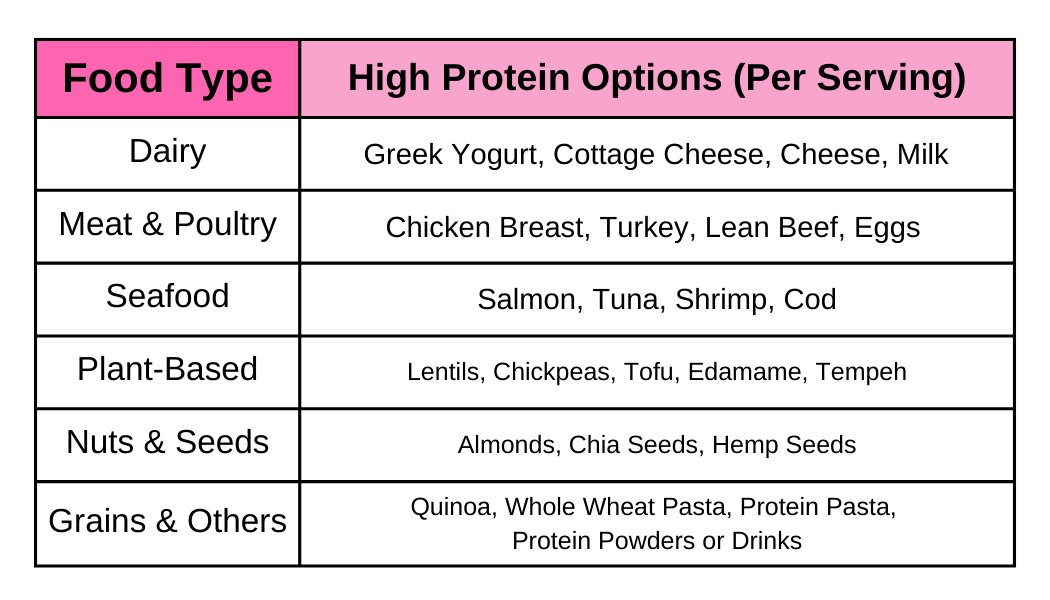
As you can see, there are plenty of protein options that align with unique nutritional needs. From following a vegetarian diet to one that minimizes dairy, you can choose protein sources that align with your own unique nutritional preferences and your goals.
How to Increase Protein Intake Throughout the Day
Now that we’ve covered a wide variety of protein sources, let’s get to the action steps! How do you increase your protein intake in a way that works for your lifestyle? The best way is to consume high-protein meals. Check out these 30g protein meal ideas. Here are some of the recommendations shared by our coaches at Strong with Sarah:
Breakfast Options
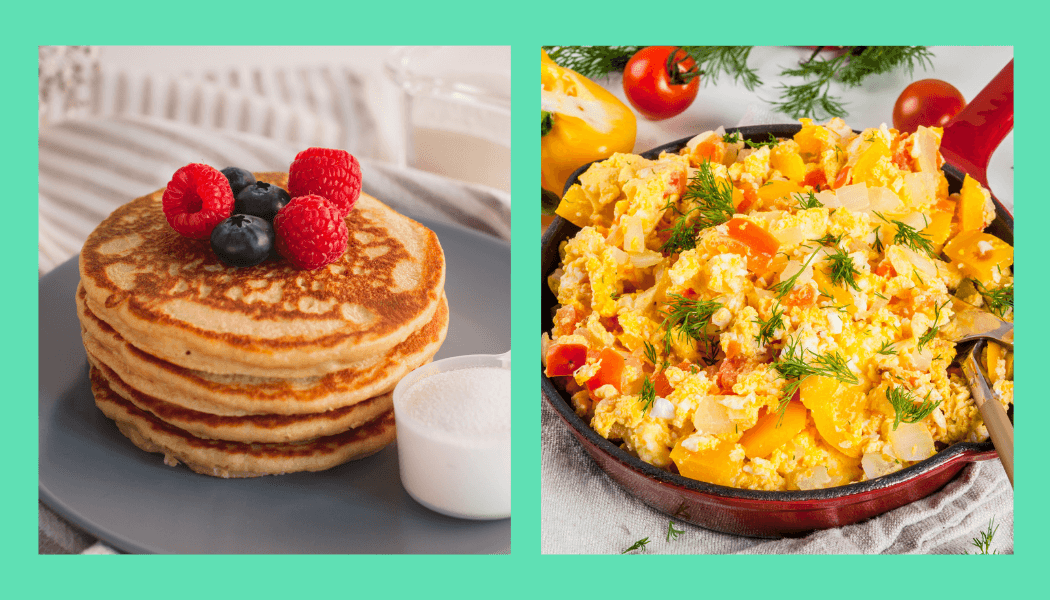
Protein Pancakes 💪 Protein: ~35g (varies slightly based on protein powder brand)
Ingredients (1 serving):
½ cup (40g) oat flour or blended oats
1 scoop (30g) vanilla protein powder
½ tsp baking powder
1 egg
¼ cup (60ml) unsweetened almond milk
½ tsp cinnamon
1 tsp vanilla extract
Cooking spray
Instructions:
In a bowl, mix oat flour or blended oats, protein powder, baking powder, and cinnamon.
Add the egg, almond milk, and vanilla extract, stirring until smooth.
Heat a nonstick pan over medium heat and lightly coat with cooking spray.
Pour small amounts of batter to form pancakes and cook 2-3 minutes per side.
Serve with sugar-free syrup or Greek yogurt on top.
Scrambled Eggs with Veggies 💪 Protein: ~25g
Ingredients (1 serving):
3 large eggs
½ cup (75g) bell peppers, diced
½ cup (75g) spinach
1 tbsp feta cheese (optional)
½ tsp olive oil
Salt and pepper to taste
Instructions:
Heat olive oil in a nonstick pan over medium heat.
Add bell peppers and cook for 2 minutes, then stir in spinach until wilted.
In a bowl, whisk the eggs and pour them into the pan.
Scramble until cooked through, then top with feta (if using).
Serve with a slice of whole-grain toast for extra fiber.
Lunch and Dinner Options
Need something practical for a busy day? These easy high-protein lunch ideas are designed with workdays in mind.

Turkey & Veggie Stir-Fry 💪 Protein: ~45g
Ingredients (1 serving):
5 oz (140g) lean ground turkey
1 cup (150g) bell peppers, sliced
½ cup (75g) zucchini, sliced
½ cup (100g) cooked brown rice
1 tbsp low-sodium soy sauce
½ tsp garlic powder
½ tsp ginger powder
½ tsp olive oil
Instructions:
Heat olive oil in a pan over medium-high heat.
Add ground turkey, breaking it apart, and cook until browned.
Add bell peppers and zucchini; sauté for 3-4 minutes.
Stir in soy sauce, garlic powder, and ginger powder, cooking for 1 more minute.
Serve over cauliflower or brown rice.
High-Protein Chicken Alfredo with Broccoli 💪 Protein: ~50g
Ingredients (1 serving):
5 oz (140g) grilled chicken breast, sliced
1 cup (100g) steamed broccoli
½ cup (60g) chickpea or whole wheat pasta
¼ cup (60g) low-fat cottage cheese
¼ cup (60ml) unsweetened almond milk
1 tbsp grated Parmesan cheese
½ tsp garlic powder
½ tsp olive oil
Instructions:
Cook pasta according to package instructions.
Blend cottage cheese, almond milk, garlic powder, and Parmesan to make a creamy sauce.
Heat olive oil in a pan and add grilled chicken and broccoli.
Pour the sauce over the chicken and broccoli, stirring until warm.
Mix with cooked pasta and enjoy!
Salmon & Quinoa Power Bowl 💪 Protein: ~45g
Ingredients (1 serving):
5 oz (140g) baked salmon
½ cup (92g) cooked quinoa
1 cup (150g) roasted Brussels sprouts
1 tbsp tahini or Greek yogurt for sauce
½ tsp lemon juice
½ tsp garlic powder
½ tsp olive oil
Salt and pepper to taste
Instructions:
Preheat the oven to 400°F (200°C). Toss Brussels sprouts with olive oil, garlic powder, salt, and pepper. Roast for 20 minutes.
Season salmon with salt, pepper, and lemon juice, then bake for 12-15 minutes.
Assemble the bowl with quinoa, roasted Brussels sprouts, and salmon.
Drizzle with tahini or Greek yogurt for extra creaminess.
Looking for more healthy, protein-packed recipes that you can make in 20 minutes or less?
As you can see based on these recipes, eating more protein doesn’t need to taste bland or boring. I bet these recipes will “pass the taste test” for the other people you live with, too!
High Protein Snack Options
While we’ve covered high protein meals, what is the best choice for snacks if you get hungry between meals? When choosing a snack, high protein options will be your best bet, both in terms of keeping you feeling full and helping to rev your metabolism!

Check out my favorite high protein snacks:
⭐️ Cottage cheese with pineapple
⭐️ Protein bars (store-bought or homemade).
⭐️ Hard-boiled eggs
⭐️ Nuts and seeds
⭐️ Edamame with sea salt
⭐️ String cheese and turkey roll-ups (add a pickle spear for extra crunch)
⭐️ Plain greek yogurt with fresh berries
How to Get More Protein in Your Diet with Quick Add-Ons
Sometimes, it’s helpful to add a quick protein source to the meals and snacks that your family already loves. Remember, you don’t need to always “reinvent the wheel” in order to increase your protein intake!
Here are my favorite “hacks” to adding protein to your meals:
👍🏻 Add protein powder to smoothies, oatmeal, or baked goods
👍🏻 Sprinkle hemp seeds, chia seeds, or nutritional yeast on top of your snacks or meals
👍🏻 Swap regular pasta noodles for high-protein (chickpea pasta) or whole wheat pasta
👍🏻 Use greek yogurt instead of mayo or sour cream in homemade dressings and dips
👍🏻 Add extra egg whites to oatmeal or omelets
Common Mistakes When Increasing Protein Intake
While adding more protein to your diet is relatively easy and straightforward, there are a few common mistakes that people make. None of these pose a “danger” or “threat” to your weight loss results or to your health, but they may cause uncomfortable symptoms like bloating or boredom with meals. Yuck!
Let’s cover the most common pitfalls that happen when adding more protein to your meals and snacks:
❌ Relying too much on processed protein bars and premade protein shakes
While these options are convenient and great to supplement your meals, these foods also contain a higher amount of carbs, fats, and calories. Also, some pre-made bars and shakes that are labeled as “high protein” really don’t have as much protein as you’d think.
❌ Ignoring plant-based options
Listen – there’s nothing wrong with only choosing animal sources for protein. However, don’t overlook or discount plant-based protein sources, too! These types of sources tend to have more fiber and antioxidants than their animal counterparts, which can support gut health, digestion, and heart health.
❌ Not drinking enough water or consuming enough fiber
While protein is a powerhouse in and of itself, it requires “teammates” to keep your digestive system running smoothly. If you don’t drink enough water or consume enough fiber while upping your protein game, you might end up feeling constipated or bloated. Be mindful of increasing your water intake and fiber intake while increasing your protein!
❌ Not eating enough throughout the day
While protein helps to keep you feeling full and satisfied, it isn’t a “miracle food” for weight loss (or any other goal.) In order to feel your best, I recommend spreading your protein intake out throughout the entire day, as opposed to avoiding protein throughout the day and eating a massive amount of protein at dinner.
Wrapping Things Up!
There we have it, friends! We’ve covered a lot of great information about how to increase your protein intake without adding extra stress to your life. Remember, from animal products to plant-based products and from nuts/seeds to dairy, be sure to choose a wide variety of protein sources that you enjoy eating and that help you feel your best!
